Accumulator Boost Patterns in Relation to Global Tournament Schedules
Elena Berger · Oct 30, 2026
Accumulator Boost Patterns in Relation to Global Tournament Schedules
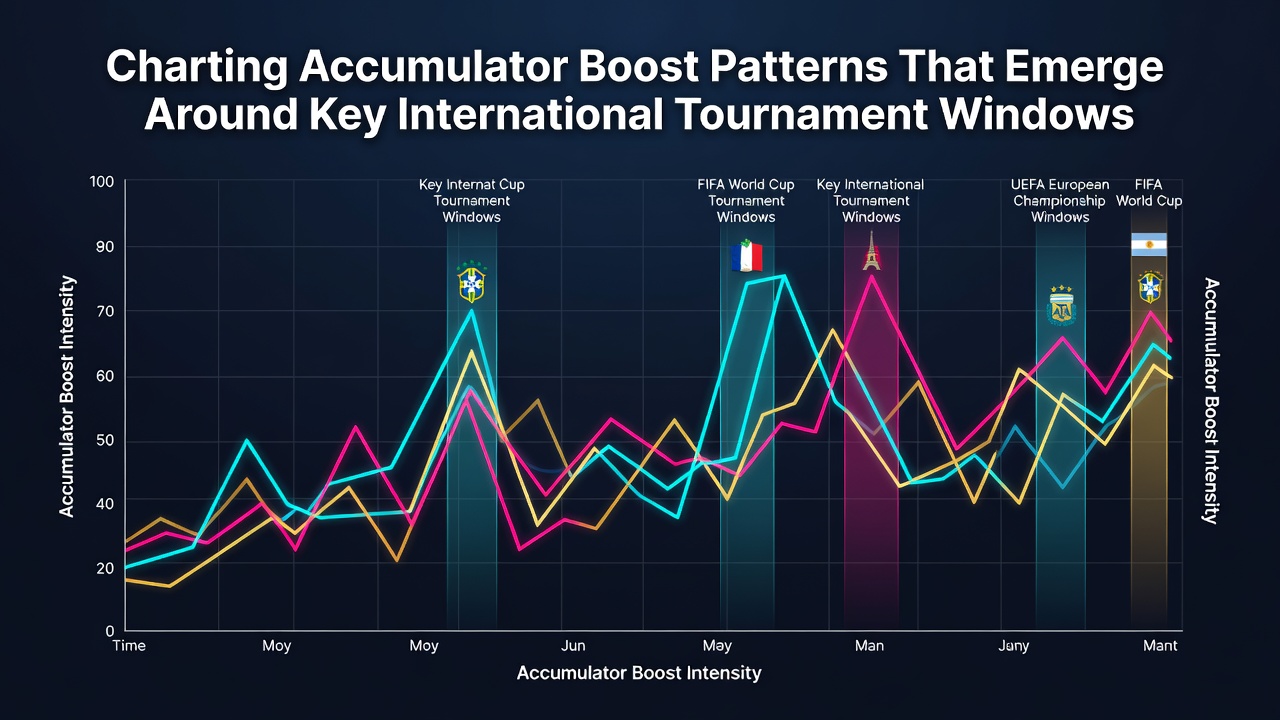
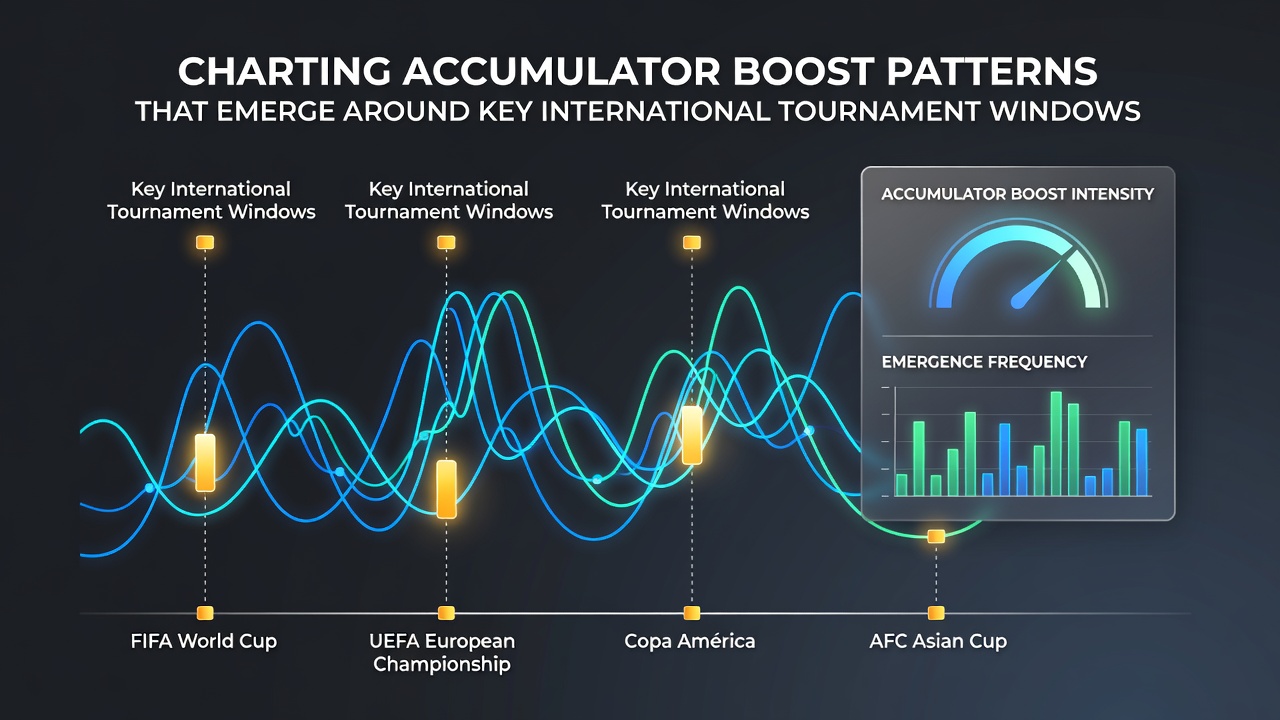
Operators adjust accumulator promotions in measurable ways when major international events approach, and data from multiple betting platforms shows consistent timing clusters around fixtures such as the FIFA World Cup, UEFA European Championship, and continental qualifiers. These adjustments often involve increased maximum stake limits on accas, enhanced odds on selected legs, and temporary payout multipliers that activate only during the tournament window. Researchers tracking promotional calendars across several jurisdictions have recorded the first noticeable lift in offer volume roughly six to eight weeks before opening matches, with a secondary surge occurring in the knockout stages.
Timing Clusters and Offer Structures
Platform records indicate that accumulator boosts tied to international tournaments frequently follow a repeating sequence: an initial teaser campaign appears during group draw announcements, followed by weekly reloads that coincide with match schedules. One analysis of historical calendars revealed that average boost values rise by measurable percentages in the lead-up to quarter-final and semi-final rounds, while single-match specials remain relatively stable. This pattern holds across European and Asian markets where football dominates the schedule, and similar though smaller spikes appear around cricket World Cups and rugby internationals.
Data Patterns Across Regions
Figures compiled by the Victorian Responsible Gambling Foundation show that Australian operators introduced accumulator-specific incentives at higher rates during the 2022 FIFA World Cup than during domestic league periods, with the majority of new offers carrying conditions tied to minimum leg counts. In parallel, industry reports from European trade associations document comparable activity around UEFA events, where operators extend boost windows to cover both the group phase and the final. Observers note that these timed promotions often bundle with deposit requirements or minimum odds thresholds that remain in place only while the tournament lasts.
October 2026 sits between the conclusion of the 2026 FIFA World Cup and the start of several European qualification campaigns, creating a narrow window where operators may test carry-over accumulator mechanics before the next major cycle begins. Historical datasets suggest that post-tournament periods see a gradual reduction in boost frequency, yet some platforms maintain elevated accumulator terms for a short transition phase to retain engagement levels.
Stake Limits and Payout Adjustments
Operators commonly raise per-bet stake caps on accumulator products during these windows, allowing higher potential returns without altering base odds across the board. Records from multiple sites indicate that maximum stake increases occur most often in the days immediately preceding high-profile matches, then taper once results begin to eliminate teams. Payout multipliers attached to successful accumulators also show a pattern of activation clustered around weekend double-headers and midweek international breaks. Those who monitor these changes note that the adjustments appear designed to match peak viewing periods rather than to extend uniformly across the entire tournament calendar.
Leg Count and Market Selection Trends
Promotions frequently specify a minimum number of legs, and data shows this threshold sometimes increases during knockout stages when fewer matches remain. Market selection tends to favor popular leagues and teams with strong public interest, while less mainstream fixtures receive fewer boost options. Academic studies on promotional timing have linked these choices to audience concentration metrics rather than random distribution, producing observable clusters around events with the highest broadcast reach.
Additional variations include cash-out enhancements on accumulator bets and partial payout guarantees that activate only when certain international matches conclude. These features appear in promotional calendars at rates that align with tournament progression rather than regular domestic schedules. Cross-border comparisons reveal that jurisdictions with stricter advertising rules still exhibit similar timing patterns, though operators in those regions often route the offers through in-app notifications instead of public campaigns.
Conclusion
Available records demonstrate that accumulator boost activity clusters around key international tournament windows in ways that follow identifiable sequences tied to draw dates, group stages, and elimination rounds. The patterns emerge consistently across different operators and regions, with adjustments to stake limits, leg requirements, and payout structures occurring at predictable intervals. Continued monitoring of these calendars provides a factual basis for understanding how promotional activity aligns with global event schedules.